Restored Property Access
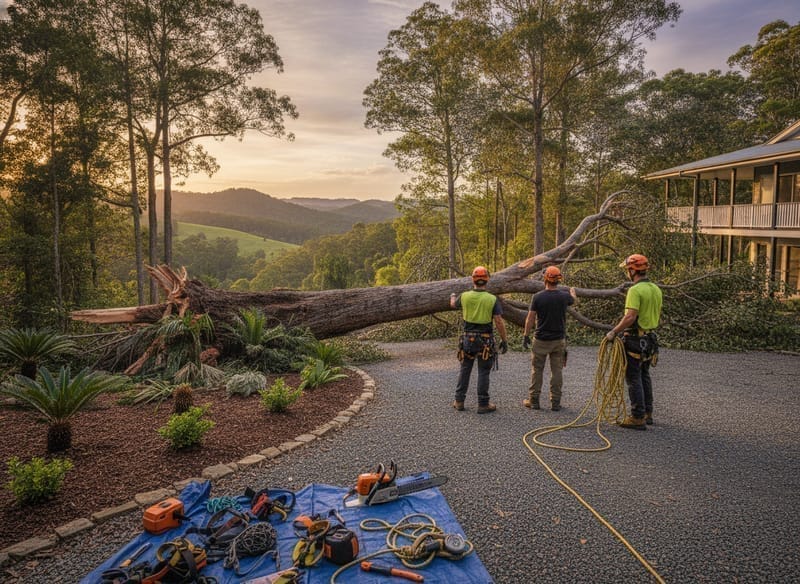
Clear driveways, pathways, fences, and garden beds blocked by tangled storm debris.
Comprehensive cleanup of shattered canopies, snapped trunks, and windblown debris across Mount Pleasant.
Servicing storm-affected properties in Mount Pleasant, Golden Point, Redan, and Ballarat Central.
When severe weather sweeps through Ballarat, our storm damage tree removal Mount Pleasant service restores order to your property by clearing fallen limbs, fractured trunks, and dangerous hung-up branches.
Mount Pleasant's combination of freezing winter rain and heavy wind gusts puts immense lateral stress on mature English oaks and brittle poplars. Clay soils soften during winter storms, leading to widespread root plate rocking on slopes.
Clear driveways, pathways, fences, and garden beds blocked by tangled storm debris.
Remove fractured branches suspended in tree canopies before they drop unexpectedly.
Get clear, professional paperwork and invoicing for your insurer to speed up claim approvals.
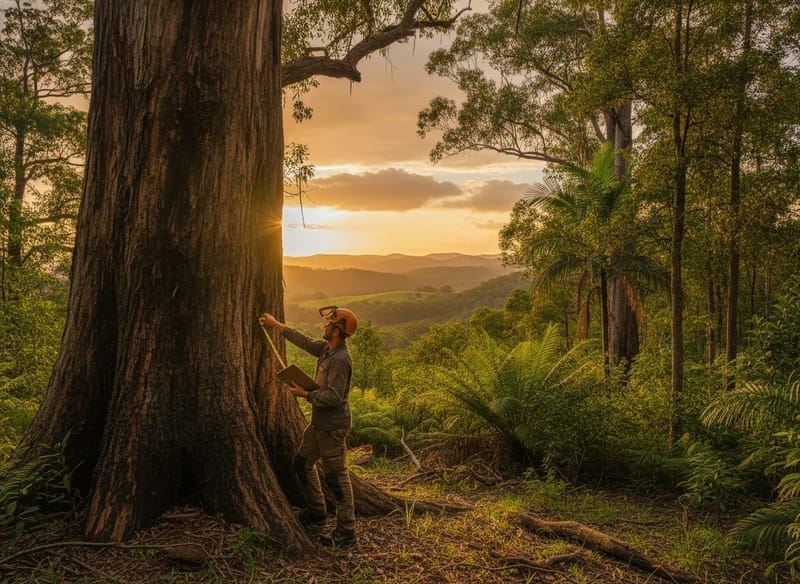
We evaluate all storm damage across your property and identify unstable hung-up limbs.
We clear access routes, driveways, and structures before tackling general garden debris.
Our climbers make clean pruning cuts on fractured branches to prevent fungal decay.
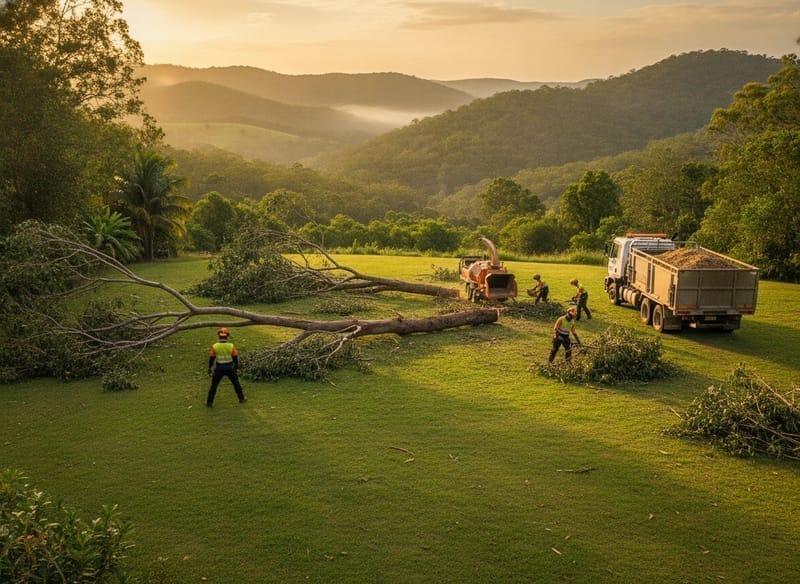
We mulch all branches, remove heavy logs, and leave your property thoroughly clean.
Ballarat's cold, harsh climate and extreme weather events put mature trees under immense stress. When wild weather strikes, securing rapid, professional Storm Damage Tree Removal Mount Pleasant is critical to safeguarding your home, family, and property. Unlike tropical regions where trees grow fast and bend, our slow-growing heritage exotics and native eucalypts tend to crack, splinter, and fail catastrophically under heavy wind loads.
Whether you are dealing with a collapsed Manna Gum after winter rains have saturated the Volcanics basalt clay, or a massive English Elm dropping limbs onto your roof during a sudden spring gale, our team is equipped to handle the crisis. We understand the urgency of clearing hazardous timber blocking steep driveways or threatening overhead powerlines. Our highly trained arborists provide immediate make-safe solutions tailored specifically to the unique terrain and established character of this area, ensuring your property is secured without delay.
Attempting DIY cleanup or hiring unqualified workers after a severe storm is exceptionally dangerous. Fallen or partially collapsed trees are not simply dead wood; they are massive structures loaded with unpredictable tension and compression forces. A single incorrect cut on a hung-up Messmate limb can cause the timber to violently snap back, potentially causing fatal injuries or severely compounding the damage to your roof, fencing, or vehicles.
Furthermore, substandard contractors often resort to damaging practices like "lopping" or "topping" compromised trees to quickly reduce their height. As outlined in the AS4373 pruning standards, this practice leaves large, ragged stubs that promote weak, fast-growing epicormic shoots, guaranteeing even worse failures in the next storm.
Our team provides a fundamentally different approach. We are AQF-qualified arborists who understand the complex physics of storm-damaged timber. We utilise advanced rope-access techniques, heavy-duty rigging, and specialised elevated work platforms to safely dismantle compromised trees piece by piece. By cleanly cutting and carefully lowering heavy debris, we mitigate any further risk to your property, cleanly resolve the immediate hazard, and set your remaining landscape up for long-term recovery.
Every storm leaves behind a unique set of hazards. Our technical approach is designed to safely dismantle and process unpredictable, storm-loaded timber in the most challenging environments.
Upon arrival, our AQF Level 3 arborists conduct an immediate site risk assessment. We tag trees by priority: immediate hazards over houses or powerlines are addressed first, followed by hung-up limbs, and finally, fallen timber on open ground. We establish safe drop zones and secure the perimeter before any chainsaws are started.
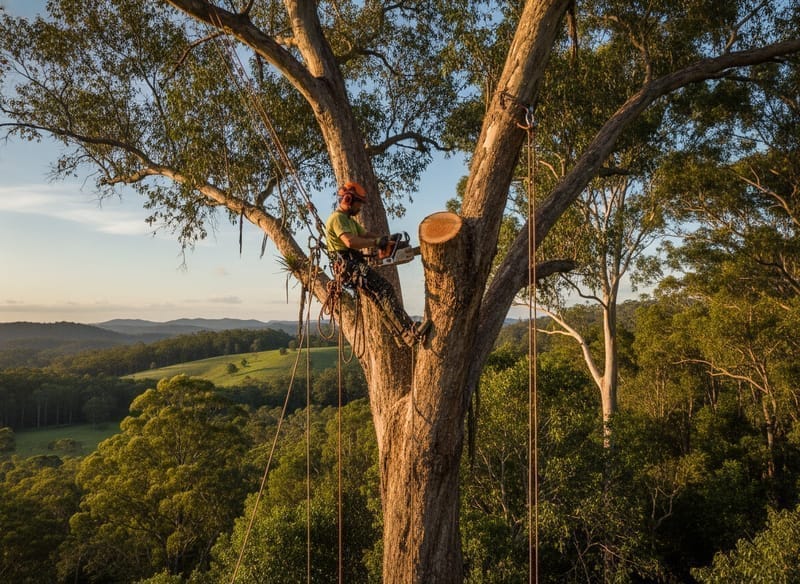
For partially failed trees or heavy branches suspended over structures, we deploy advanced single and double-rope climbing techniques. Using friction devices and high-load rigging lines, we carefully sever tensioned wood with top-handle climbing saws (like the MS201T) and lower the timber to the ground without impacting your roof.
When a massive heritage tree fails completely on a tight, steep block, traditional felling is impossible. We utilise crane-assisted removal to vertically lift multi-ton trunk sections up and away from your home. This is essential for safe extraction in confined spaces where ground impact must be zero.
Saturated winter soils frequently lead to whole-tree uprooting. We expertly manage the highly tensioned root plate, severing the trunk safely so the massive soil plate can settle back into its hole. We then process the resulting canopy using high-capacity 12-inch wood chippers, converting the hazard into manageable mulch.
When you call our team in an emergency, we initiate a streamlined, safety-first process designed to remove hazards efficiently while supporting your insurance claims.
Step 1: Emergency Callout and Make-Safe Assessment. We dispatch our crew to your property to immediately identify and neutralise life-safety hazards. We assess hung-up branches, leaning trunks, and blocked access routes, stabilising the site so you and your family are safe.
Step 2: Photographic Evidence and Insurance Quoting. We know insurance claims require precision. Before any major clearing begins, we take detailed photographs of the failed timber and structural damage. We provide a comprehensive, itemised quote breaking out each specific job line, formatted exactly how your insurer needs it.
Step 3: Safe Extraction and Dismantling. Utilising our fleet of elevated work platforms, spider lifts, and heavy-duty chainsaws, our climbers systematically dismantle the damaged canopy. We rig heavy limbs down safely, ensuring no secondary damage occurs to your property during the extraction.
Step 4: Debris Cleanup and Site Restoration. Once the hazard is neutralised, our tipper trucks, skid steers, and wood chippers move in. We remove all unwanted logs and mulch the canopy, leaving your property clean, safe, and ready for any necessary building repairs.
Safety and compliance are non-negotiable in emergency arboriculture. Our operations strictly adhere to AS4373 (Pruning of Amenity Trees) and AS4970 (Protection of Trees on Development Sites). Our business is comprehensively backed by public liability insurance and WorkCover for all staff, protecting you entirely while we work on your property. Every climber holds an AQF Level 3 in Arboriculture, alongside mandatory Working at Heights, EWP, and chainsaw cross-cut tickets. We never take shortcuts when dealing with compromised timber, ensuring that every cut is planned, calculated, and legally compliant.
Operating in this area requires deeply specialised local knowledge. The steep inclines of Mount Pleasant, combined with texture-contrast basalt clay that turns to mush after heavy August rains, make machinery access incredibly challenging. Furthermore, the historic Ballarat East Goldfield beneath our feet means we must be highly vigilant regarding unrecorded mine shafts that can act as sinkholes under the weight of heavy equipment.
Council compliance remains critical, even during a crisis. The City of Ballarat enforces Clause 52.37 for boundary canopy trees and the stringent Vegetation Protection Overlay Schedule 2 (VPO2), which protects any exotic or native tree over 4m tall in a private front garden. While emergency exemptions apply for timber presenting an immediate risk of injury or property damage, you are legally only permitted to remove the part creating that specific hazard. When conducting Storm Damage Tree Removal Mount Pleasant, we expertly navigate these exact council regulations, ensuring all make-safe works remain strictly within legal boundaries.
Once the immediate storm damage has been cleared, your remaining trees require close monitoring. The loss of a nearby canopy can expose previously sheltered trees to new, intense wind loads. Over the following weeks, inspect the base of your remaining trees for newly formed soil cracks, lifting earth, or heaving root plates, which indicate instability.
Look up into the canopy for "widow-makers"—broken, dead branches that the storm loosened but didn't entirely dislodge. If you notice structural changes, unusual leaning, or hanging deadwood, call our team immediately for a proactive structural assessment to secure your property before the next major weather event.
Storm damage cleanup is quoted based on the volume of debris and technical complexity of the job.
We provide transparent, fixed written quotes for all storm cleanup work.
We provide storm damage tree removal across Mount Pleasant and the wider Ballarat region.
Contact our local team for complete storm damage cleanup and tree care in Mount Pleasant.
Get a Storm Quote